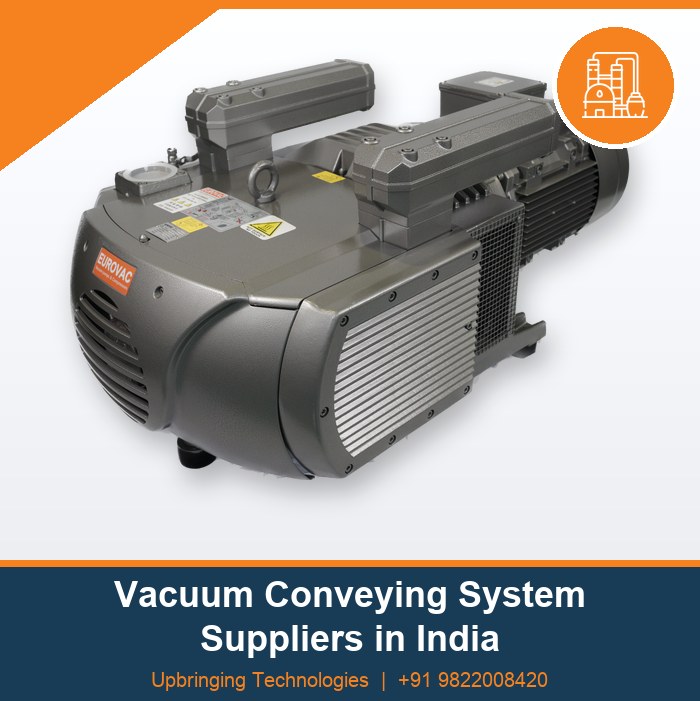


Vacuum Conveying System Suppliers in India | Upbringing Technologies

Vacuum Conveying System Suppliers in India
whatsapp-now
enquire-now

Upbringing Technologies is leading Vacuum Conveying System Suppliers, Dealers, Distributors and Exporters in India. A Vacuum Conveying System is used to transfer powders, granules, pellets, and other bulk materials through pipelines using controlled air pressure and suction. Vacuum conveying provides an enclosed method of material movement and can be integrated into automated production, processing, packaging, and storage operations.

These systems are widely used where materials need to be transferred between different process points without manual handling. Depending on the application, the conveying arrangement can include a vacuum pump, receiver, filters, pipelines, valves, controls, and suitable loading equipment.

The correct system depends on material characteristics, conveying distance, required capacity, particle size, bulk density, moisture content, temperature, and process requirements. Proper equipment selection helps achieve consistent material transfer while supporting clean and efficient operation.

Types of Vacuum Conveying System

As we are leading Vacuum Conveying System Suppliers in India, our Types are designed to meet different application requirements and industry standards, including the following types:

  • Vacuum Conveying System: A vacuum conveying system creates suction within a closed pipeline to draw material from a pickup point toward a receiving vessel. It can be configured for intermittent or continuous material transfer.
  • Vacuum Conveyor System: A vacuum conveyor system uses negative pressure to transport suitable bulk materials through enclosed pipelines. It can reduce manual material movement and support automated production processes.
  • Pneumatic Vacuum Conveying System: A pneumatic vacuum conveying system transfers materials using controlled airflow and vacuum. The conveying parameters can be selected according to material properties and required transfer capacity.
  • Vacuum Material Conveying System: A vacuum material conveying system is designed to move powders, granules, pellets, and other suitable materials from storage or processing equipment to the required destination.
  • Vacuum Powder Conveying System: A vacuum powder conveying system transports powdered materials through a pipeline using suction. It is commonly considered for processes where enclosed handling is preferred.
  • Vacuum Granule Conveying System: A vacuum granule conveying system transfers granular materials through pipelines. The system can be configured according to granule size, density, flow characteristics, and conveying distance.
  • Vacuum Pellet Conveying System: A vacuum pellet conveying system is used to move pelletized materials between storage, processing, and production equipment. Pipeline and airflow selection depends on the pellet characteristics.

Vacuum Transfer and Loading Systems

  • Vacuum Conveying Equipment: Vacuum conveying equipment can include vacuum pumps, receivers, filters, valves, pipelines, sensors, and control systems. These components work together to provide controlled material transfer.
  • Vacuum Conveying Machine: A vacuum conveying machine is a packaged arrangement designed to collect and transfer bulk materials using suction. It can be installed close to individual processing machines or integrated into larger systems.
  • Vacuum Conveying Unit: A vacuum conveying unit typically combines the material receiver, filtration arrangement, vacuum source, controls, and discharge mechanism into one functional system.
  • Vacuum Transfer System: A vacuum transfer system uses controlled suction to move materials from one location to another. It can connect storage vessels with processing, mixing, filling, or packaging equipment.
  • Vacuum Material Transfer System: A vacuum material transfer system provides enclosed movement of suitable bulk materials between different process points. It can help reduce manual transfer operations.
  • Vacuum Suction Conveying System: A vacuum suction conveying system draws material through a pipeline using negative pressure. The arrangement can be adapted for different material flow rates and distances.
  • Vacuum Loader System: A vacuum loader system uses suction to automatically collect and transfer materials into a receiving hopper or processing machine. It is commonly used where automated material feeding is required.

Central and Pneumatic Conveying Arrangements

  • Central Vacuum Conveying System: A central vacuum conveying system uses a centralized vacuum source to supply suction to multiple material transfer points. This arrangement can support larger production facilities with several machines.
  • Dense Phase Vacuum Conveying System: A dense phase vacuum conveying system transports material at a relatively high solids concentration and controlled conveying velocity. It can be considered for suitable materials where gentle handling is required.
  • Dilute Phase Vacuum Conveying System: A dilute phase vacuum conveying system transports material through an airflow with a lower solids concentration. It can provide higher conveying velocities for suitable materials and applications.
  • Pneumatic Vacuum Conveying Equipment: Pneumatic vacuum conveying equipment combines vacuum generation with controlled airflow to transport bulk materials through pipelines. Equipment selection depends on material and process requirements.
  • Vacuum Conveying Pump System: A vacuum conveying pump system provides the suction required to move material through the conveying pipeline. The pump should be selected according to airflow, vacuum level, conveying distance, and material load.

Application-Specific Vacuum Conveying

  • Vacuum Conveying System for Powders: A vacuum conveying system for powders provides enclosed transfer of powdered materials between process equipment. Proper filtration and conveying velocity are important for reliable operation.
  • Vacuum Conveying System for Granules: A vacuum conveying system for granules is designed to transfer granular materials while maintaining controlled airflow through the conveying line.
  • Vacuum Conveying System for Pellets: A vacuum conveying system for pellets supports automated transfer of pelletized materials. Pipeline design and conveying conditions should be matched to the pellet characteristics.
  • Vacuum Conveying System for Plastics: A vacuum conveying system for plastics can transfer plastic pellets, granules, and regrind between storage and processing machinery such as extruders and molding machines.
  • Vacuum Conveying System for Food: A vacuum conveying system for food can be used for suitable food powders, ingredients, granules, and other bulk products. Hygienic construction and appropriate filtration are important considerations.
  • Vacuum Conveying System for Pharmaceutical: A vacuum conveying system for pharmaceutical applications can transfer suitable powders and granules in controlled processing environments. System design should consider cleanliness, containment, and material characteristics.
  • Vacuum Conveying System for Chemicals: A vacuum conveying system for chemicals can transfer suitable chemical powders, granules, and bulk materials. Material compatibility and containment requirements should be evaluated before selection.

Powder Handling and Bulk Material Transfer

  • Vacuum Conveying System for Powder Handling: A vacuum conveying system for powder handling provides enclosed movement of powders between storage, processing, blending, and packaging equipment. Proper filtration helps manage fine particles during operation.
  • Vacuum Conveying System for Bulk Materials: A vacuum conveying system for bulk materials supports automated movement of suitable dry materials through pipelines. Capacity and equipment selection depend on material properties and conveying requirements.
  • Industrial Vacuum Conveying System: An industrial vacuum conveying system is designed for repetitive material transfer in manufacturing and processing facilities. It can be configured for individual machines or integrated into centralized production systems.

How a Vacuum Conveying System Works

  • Step 1: Material Collection: The pickup device is positioned at the source of the material, such as a hopper, storage bin, bag dumping station, or process vessel.
  • Step 2: Vacuum Generation: The vacuum source removes air from the conveying line and creates negative pressure inside the system.
  • Step 3: Material Pickup: The pressure difference draws the material into the conveying pipeline. Airflow carries the material toward the receiving vessel.
  • Step 4: Material Separation: At the receiver, filters or separators separate the conveyed material from the transport air. The collected material remains inside the receiving vessel.
  • Step 5: Vacuum Cycle: The system continues the conveying cycle according to the programmed controls. Sensors can monitor material level and vacuum conditions.
  • Step 6: Material Discharge: Once the required quantity has been collected, the discharge mechanism releases the material into the connected processing or production equipment.

Features and Benefits of Vacuum Conveying System

As Vacuum Conveying System Dealers in India, our products provide several Features and Benefits including consistent quality, smooth finish, and long service life.

Feature Benefit
Enclosed conveying Helps reduce material exposure
Automated transfer Reduces manual material handling
Flexible pipeline layout Supports different plant configurations
Centralized operation Can serve multiple machines
Controlled airflow Supports consistent material movement
Filtration system Helps separate conveyed material from air
Compact equipment Requires relatively limited installation space
Automated controls Supports repeatable conveying cycles

Applications of Vacuum Conveying System

As Vacuum Conveying System Distributors in India, our all types are used in various types of industrial sectors such as:

  • Plastic Processing: Vacuum conveying can transfer plastic pellets, granules, and regrind from storage systems to extruders and molding machines.
  • Food Processing: Suitable food ingredients and dry materials can be conveyed between storage, mixing, processing, and packaging equipment.
  • Pharmaceutical Manufacturing: Vacuum conveying can support the controlled transfer of suitable powders and granules between pharmaceutical process stages.
  • Chemical Processing: Suitable chemical powders and granules can be transferred through enclosed pipelines when the system materials are compatible with the product.
  • Packaging Lines: Vacuum conveying can feed suitable powders, granules, and pellets into packaging and filling equipment.
  • Powder Processing: The system can transfer fine and coarse powders between hoppers, mixers, dryers, and other processing equipment.
  • Bulk Material Handling: Industrial facilities can use vacuum conveying to automate the movement of dry bulk materials across different production stages.
  • Central Material Feeding: A centralized arrangement can supply material to multiple processing machines from common storage or material preparation areas.

Why Choose Us?

As one of the leading Vacuum Conveying System Exporters in India, we deliver premium-quality solutions designed to meet diverse industrial requirements. Here's why we stand out:

  • Application-Based Design: We evaluate material characteristics, conveying distance, required capacity, particle size, bulk density, moisture content, and process conditions before recommending suitable equipment.
  • Complete System Integration: A complete solution can include the vacuum source, receiver, filters, pipelines, valves, sensors, controls, and discharge equipment required for material transfer.
  • Material-Specific Selection: Different powders, granules, pellets, and bulk materials behave differently during conveying. Equipment and operating parameters should therefore be selected according to the material properties.
  • Automated Operation: Vacuum conveying systems can be integrated with level sensors, PLC controls, automatic valves, and production machinery to support repeatable material transfer.
  • Maintenance Support: Regular inspection of filters, pipelines, valves, receivers, and vacuum equipment helps maintain conveying performance and reduce unexpected downtime.

Choose Upbringing Technologies is leading Vacuum Conveying System Suppliers, Dealers, Distributors and Exporters in India. Vacuum conveying provides an efficient method for moving powders, granules, pellets, and suitable bulk materials through enclosed pipelines. By using controlled suction and airflow, these systems can connect storage, processing, mixing, packaging, and production equipment while reducing manual material handling. Proper selection of the vacuum source, receiver, filters, pipelines, valves, and control components helps achieve reliable and consistent material transfer. For reliable vacuum conveying solutions, contact us today to discuss your material handling requirements and find the right system for your application.

FAQ’s

A vacuum conveying system transfers powders, granules, pellets, and other suitable bulk materials through pipelines using suction and controlled airflow.

Suitable systems can handle many powders, granules, pellets, plastic materials, food ingredients, pharmaceutical materials, and chemical products, depending on their properties.

Dense phase conveying generally moves material at a higher solids concentration and lower conveying velocity, while dilute phase conveying uses a higher airflow velocity with a lower solids concentration.

A typical system may include a vacuum pump, receiver, filters, pipelines, valves, sensors, controls, pickup equipment, and a material discharge arrangement.

Consider material characteristics, required conveying capacity, distance, particle size, bulk density, moisture content, temperature, filtration requirements, and the number of material transfer points.

Call Us
WhatsApp